The description of the river portrays a nationalist pride as it showcases:
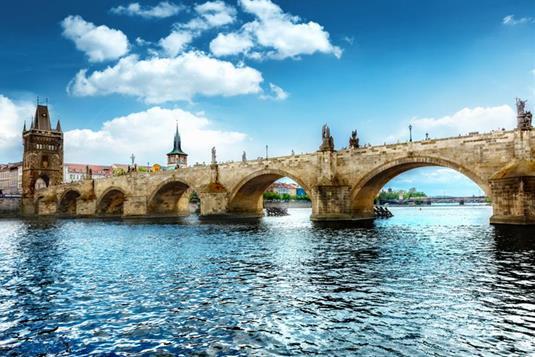
The river
The use of the river (to represent Bohemia) shows a nationalist pride as the river, The Moldau, is one of the biggest landmarks of the country. This might be due to the fact that it’s the longest river in the Czech Republic- measuring four hundred and thirty km in length. (Vltava, 1)

Unity
The joining of the two small streams (at the beginning of the tone poem) showcases the unity of the country as a whole- as it shows that two opposites (in this case cold and warm) can come together to create something bigger and stronger. This could also showcase how long the country struggled for its independence- as it took them seventy years to get it. (Nosek, 171)

Imagery
The stress of the array of landscapes within the tone poem, in a way, display the pride that Smentana had for his country as it shows that there was a lot to offer in his country- rather that be the meadows, water, or woods.

As the river / tone poem makes its way to the image of mermaids dancing, the stress of the Bohemia spirit comes out- as dancing is a large part of the culture.

As the river flows past the castles and palaces, the pride of the government, and history of the country, shows as the sounds are grand and sound important.

Love for ones country
Lastly, but not least, the fact that the tone poem vanishes in the distance really shows that the tone poem is about pride- as the rest of the country was displayed as something grand and then it faded to nothing. This shows that Smetana thought that only his country was worthy of a tune, for the river may go on but it would be boring and tuneless.
 The Moldau